I have always admired people who were fluent in multiple languages. I didn’t see them learn it and assumed it must have come easy. In my late twenties, I had the opportunity to learn Malayalam during a stint in Kochi. I made a feeble attempt, trying to pass off my limited Tamil as attempts at Malayalam and quietly withdrew when I realised both the accent and the language were beyond quick grasp.
When I moved to Ahmedabad, I had the opportunity to pick up Gujarati. I didn’t live there long enough to feel the urge or the pressure to learn the language. This time, I got by with the limited Hindi I knew. I frowned at people who couldn’t reply in Hindi as if it were their fault that they knew only Gujarati.
Many years later, my wife and school-going daughter enrolled for Spanish language classes on the weekends. I could have joined them but didn’t. Together, they had a good time and had each other to practise with. It was a happy sight.
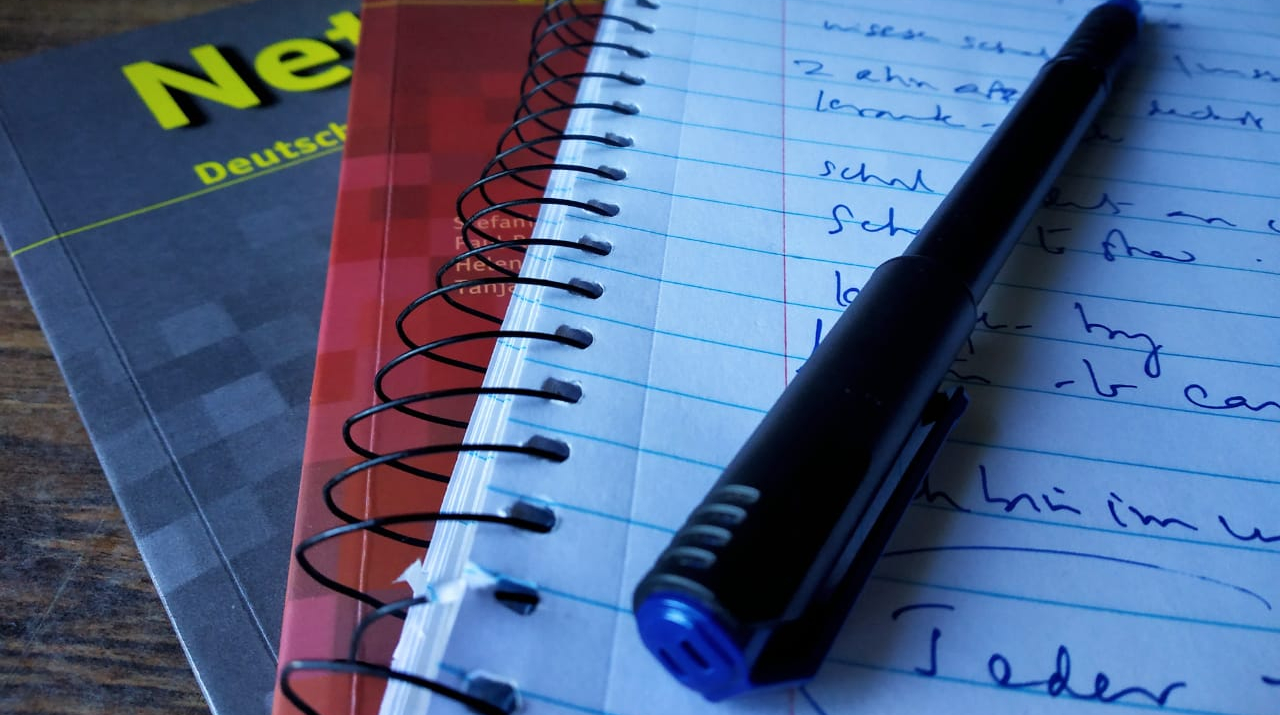
During the current lockdown came an opportunity to enrol for a foreign language course. A couple of friends were signing up and that was incentive enough to join. So, I did.
After the first couple of classes, I was hugely excited. I could barely contain my eagerness to make progress. It seemed like the first time in years that I was learning something from scratch. The instructor began by talking about being in a state akin to an infant learning a language for the first time – the sounds, the words, the meanings, the structure, the rudimentary attempts at conversation… all uncontaminated by any prior knowledge – and, in a manner of forewarning, asked us to approach the learning with a beginner’s mind. Easily said. Bloody tough in practice, I discovered.
As adult learners, we are influenced by our expectations and judgments of ourselves, comparisons with past selves and others, by our liking or disliking of people around us, what we reject or accept based on how we are dealt with, and many other aspects that often work behind the veil of our awareness. We have our own pre-existing learning styles and ease or difficulty with technology.
Very soon, I began to feel overwhelmed. My excitement gave way to frustration. No sooner did I feel that I had grasped something, than I found myself gasping at the wave of new information or diverse treatment of the noun, verb, masculine-feminine, singular-plural, formal-informal, prepositions, and many more such aspects of grammar. I felt I was not adding to what I had learnt previously; new vocabulary was instead overwriting what I thought I had committed to memory and new or additional rules of grammar confused and confounded me. As others in class started to engage in banter with their newly acquired language skills, I ended up feeling lost, blinking, and imagining that the joke was on me.
I felt deflated, defeated. But learning a new language remained a charming idea. It had just become a challenge. When I took a step back and looked at it, language as an aid to communication, society and civilisation was something of a marvel. I knew thousands before me had encountered their own blocks and struggled to gain fluency, even mastery. I wasn’t ready to let it become a barrier, an insurmountable wall.
I have had to take a hard look at what I have done until now that has created the learning difficulties, before concluding that I am dealing with a disability. This process is hardly over.
I realise that nothing comes easy. Often when people say something is, they perhaps are conveying their love for it, or that good feeling when they cross the finish line after toiling, and all the effort that went in has diminished in hindsight. I had, in my fantasies, imagined that I was a quick learner and foolishly made that demand of myself in this instance too. In my conceit, I had told myself that something wasn’t worth my while or important if I didn’t pick it up in the first attempt, or, quickly enough. Learning thus involved tactical retreats, reassessment and letting the matter drop if effort was called for. I began to think I was lazy rather than a quick learner.
In my youth, I don’t recall committing things to memory by going over material multiple times. I mostly relied on having a mental image of what I had read. I would read something perhaps a couple of times, take a step back and see if I could recollect the contents, where they were on a page, and assess where further understanding was required. Over the years, this capacity appears to have eroded.
In my career, and more generally in life, most learning has revolved around experiences – one’s own and others’ – and processes of reflection. They resided in the mind/psyche; some uneasily, some healthily accessible and malleable, and some others entrenched and unshakable like squatters. They were about navigating life and work, relationships, and the world at large. The rules to live by – some given, and some learnt – came easier, though not cheaply.
The rules governing a language are established and have to be carefully internalised and built on. New vocabulary has to be progressively written into memory and the associated rules for their usage understood and internalised. How does one do that?
I think some rote learning may be unavoidable. As kids, we did learn a few things this way. It became unfashionable later and I have probably lost the ability and the capacity to pack the brain in this way. I now think that unpacking what has been memorised and adding the rules, logic, and sense to connect the bits stored is preferable. It feels like hard work. And I thought learning a new language was about surfing the waves of new sounds and just weaving new patterns.
The biggest shift, I realise, is to build a discipline of regular practice. During my adolescent years, as a badminton player, I remember spending hours every day on the practice grounds and on court, building fitness and honing the craft. How could this elemental requirement of practice have eluded me in other pursuits including my attempt at learning a language?
One more time, my delusions of capability and potential have reared their face. They point to an easier path of postponement and rationalised retreat. Behind this is the irrational thought that one can leapfrog to a time when learning will be easy, pain-free, non-demanding, less awkward and entail no risk of being wrong.
My ruminations about learning a language have brought home the truth about practice in another of my pursuits – music. As a learner, I am aware that it is not sufficient to let the notes and the lyrics roll in the mind; they have to also find their rightful place, pitch and enunciation through voice. One’s range improves not from knowing more but practising more, performing more – that is, putting it out there – as an act of love, joy and courage. And commitment to one’s gifts and the craft that has been unreservedly shared by a teacher.
Language is as much of a challenge as music. With both, there is an experience of expansion. Language learning promises to be a gymnasium to enhance the plasticity of my aging brain while music works to enlarge the spaces for expression to emerge from the corners and crevices within, where words and thought are unreachable.
Leave a reply