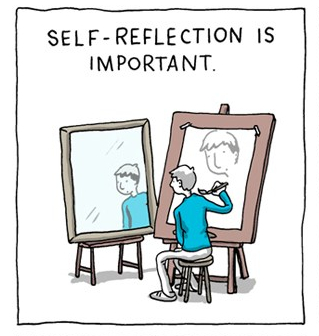
Working professionals focus far too much on achievements, job responsibilities shouldered, and certifications that paved the way to their current eminence. For good measure, they add organisation-context to suggest spread, depth and complexity that they have encountered.
‘Growth’ for the most part is explained in terms of fancier titles, fatter pay cheques, the size of the teams handled, and other metrics that are in vogue.
There is very likely a blindness operating here. Like Phil, the weatherman in Groundhog Day, who said in all his vanity, those famous lines, “I make the weather”, the corporate world feeds this myth of movers and shakers who make things happen and spawns more and more Phils. It breeds inflated egos, a limited notion of growth and success, undervaluing the role of contextual factors and other people in one’s claims to success; it obviates the need for any serious self-reflection.
“What got you here will not take you there” is now a tired cliché. The irony is that not many really know what got them to their present station.
Often, when challenged to elaborate on their own maturation as a person and a professional, they are hard-pressed to articulate the ways in which they have evolved – changed, grown, become an expanded version of a former ‘self’. Beyond evidence of discrete competencies and medals and trophies accumulated as one has moved places and positions, there is seldom a coherent narrative of the self – how and when they changed, and what prompted them to, the lessons learnt and the shifts in perspective as one traversed through a variety of settings.
The story lies in self-reflection on how one has arrived at this point. More importantly, who one is really, today. There are some questions that may be useful to work with in exploring one’s own maturation. It may seem daunting and sometimes sobering, but always educative. Making a start somewhere is the key.
From time to time it is good to ask oneself what has changed between the present moment and some other point in time (say, five years ago or when in the previous job / organisation) in terms of:
- Knowledge acquired – domain and others
- Skills added, honed, atrophied
- Talents discovered in oneself
- Views about organisations – purpose and goals, scale, structure, boundaries, power, authority, etc.
- Worldview and one’s ease / comfort with it
- Assumptions and beliefs
- What one holds as important in life
- Notions of value, growth and success, and personal goals
- What is joyful
- What or who one trusts, respects and/or tolerates
- What people mean to me
- Notions of meaningfulness
- My relationship with myself – areas of acceptance, distress, conflict, ambivalence, resignation, etc.
An intimate understanding and acceptance of one’s own process of maturation makes for authenticity and a sure-footed anchorage within. The enabling processes of self-reflection helps generate insights and subjective wisdom, a perspective, clarity and conviction. It also enables a realistic assessment of oneself, the contexts that one thrives in and the kind of goals that are worthwhile to pursue. It might present a more sobering picture of one’s part in achievements against our name. It could help avoiding the pitfall of foisting unrealistic expectations on oneself or being burdened with demands that are not in sync with our core.
This of course is no guarantee that the CV that emerges each time after reflection is the gateway to that dream job. But it sure lends self-assurance and an ease to be oneself rather than be someone else that fits a mould cast by someone else. So, inevitably some doors will stay closed. There will be those who will have little patience for you in all your integrity and will seek to constrict your presentation to the boxes they have defined. There will also be those who will seek you out for the essence you embody that aligns with their own notions of journeying, learning, sharing, shaping, and growing together.
This article first appeared on LinkedIn.
Image from Incidental Comics.
Leave a reply