Airlines move people across distances, help get those meetings and deals done, deliver precious / scarce supplies in quick time, and take people driven by curiosity and adventure to new places. Day after day. If you want to get a sense of the scale… the big picture… the trillions that has been sunk in over the decades of aviation, consider these:
The big numbers:
Flights: On average, there are over 100,000 flights a day. At any given time, there are between 8,000 and 13,000 flights in the air around the globe. If chartered flights and cargo planes are included, this number could be close to 300,000. It is not clear if these include military sorties and the flights that people in Government routinely take to aerially survey disasters, build relationships or do damage control, mend fences or build bridges, prepare for or fend off the threat of war, and attend meetings at exotic locations.
Passengers: The number of air passengers in 2014 was estimated at close to 3 billion. Even corrected for return journeys by the same passenger, and multiple journeys by a passenger during the year the number of unique passengers is likely to be very large.
Sectors: Total scheduled passenger traffic included approximately 32.1 million sectors flown (2013). Any guesses how many of them were over specific terrain: plains, rocky mountains, snow capped peaks, cities, deserts, forests, seas and lakes?
Aircraft: In 2014, Airbus tipped Boeing on net order bookings in 2014, 1456 versus 1432. While predictably, a portion of it will go to replace ageing fleets of carriers, they also point to the growth ambitions of airlines – existing and upcoming – over the next 15-20 years. Not to forget delivery backlogs of previous years’ orders. Not to forget there are other aircraft manufacturers as well. We are talking trillions of dollars here. So more flights per day in the coming years… that is for sure.
Infrastructure: It is reported that globally, there are approximately 9,000 civilian airports, close to 1,400 airlines owning a total of over 25,000 aircraft. This speaks of large investments, an enormous asset base, and a large ecosystem of suppliers and beneficiaries, infrastructure providers, maintainers, a sophisticated communications technology backbone and a nightmarish context for an international regulatory regime.
Which ever way one looks at it, these are staggering numbers. It tells us the sheer number of places that have to get things right every single day, the number of aircraft that need to be in top airworthy condition, the number of people who surrender to the man-machine and trust that they will reach their destinations intact, as scheduled.
Add to this picture, the number of families, friends, colleagues and well-wishers of passengers whose unspoken faith in the entire aviation value chain to transport loved ones without mishap, and one begins to see that an enormous number of people actually have a stake in keeping flying safe. While air travel is valued for its unmatched speed and convenience, its popularity and growth hinges on delivering people and goods safely and retaining public confidence.
Against this backdrop, consider this: Airlines’ collective net post-tax profit represents a little over 3% margin. Kind of fragile! Like the banks in 2008, they must not be allowed to fail! It offers a small clue to airlines’ penchant to cut costs by cutting corners, to defer and delay adoption of safety measures, and the simultaneous tendency for predation and alliance building.
Here, one is more concerned with being proximally correct with numbers than meeting standards of accuracy that academic rigour demands.
We referred to about a 100,000 flights each day. This will perhaps go up in the foreseeable future. How many of this involved flying over oceans, seas, vast lakes and other water bodies is anybody’s guess. An internet search doesn’t offer a clue. No clear numbers are available! A huge number of international routes being flown each day perhaps. So we don’t quite know how many passengers on average do these trips. This has implications for preparedness when it comes to disasters that involve search and rescue / recovery.
Even a modest 10% of flights puts the number at about 10,000 per day. The recent Air Asia crash (December 2014), brought home the difficulties in search and rescue / recovery even in a busy sector, and where the waters are relatively shallow. This raises important questions:
- Is there a database of manufacturers and owners of of sea -worthy vessels, UAVs, sonars, ‘tow-fish’, etc. with ICAO? Is there an inventory of underwater search assets that are effective at varying depths, and an ongoing process of updating this information?
- Is there a global map of companies / institutions that have the human capabilities and required assets to engage in underwater search? Don’t we need one?
- Like Red Adair’s rapid response to oil and gas emergencies, isn’t there a need for a response team defined and contracted, with clear mobilisation time specified?
- While there are demarcated search and rescue zones, what are the assets mandated to be available for an emergency response in these zones?
- Shouldn’t there be a well-considered spread of search assets across the globe based on air routes / route density?
- Shouldn’t there be adequate search assets with public authorities (in addition to, or,) rather than in private hands in due course?
- Is there a need to fund research specifically to design and develop products that cater to the aviation Search and Rescue / recovery needs?
Globally, thus far, it seems that response to security concerns related to aviation have prevailed in very visible and often intimidating ways; safety appears largely taken for granted.
We don’t know for sure that MH370 is indeed in the southern Indian Ocean. We don’t know for sure, that there will not be another MH370-like situation, given the slow response to real-time tracking and other measures proposed. We don’t know for sure that there will not be other mishaps over the seas in the coming months and years. The sooner we conceptualise and craft a response ranging from policy to human and material assets on the ground, the more reassured we will be. These will inevitably call for funds and investments which in turn is likely to trigger protests and arguments pointing to how safe air travel already is compared to the statistics on road, rail and sea accidents. There is a tough call here. One that can perhaps be easier made in the middle of the night, when you are on an international flight over the Atlantic, the Pacific or the Indian ocean, the cabin lights are off, you slide further into your seat to catch some sleep and feel the first manoeuvre of the aircraft, the first perceptible change in altitude, or a bumpy ride through turbulence… you think of your loved ones … and you recall MH370.
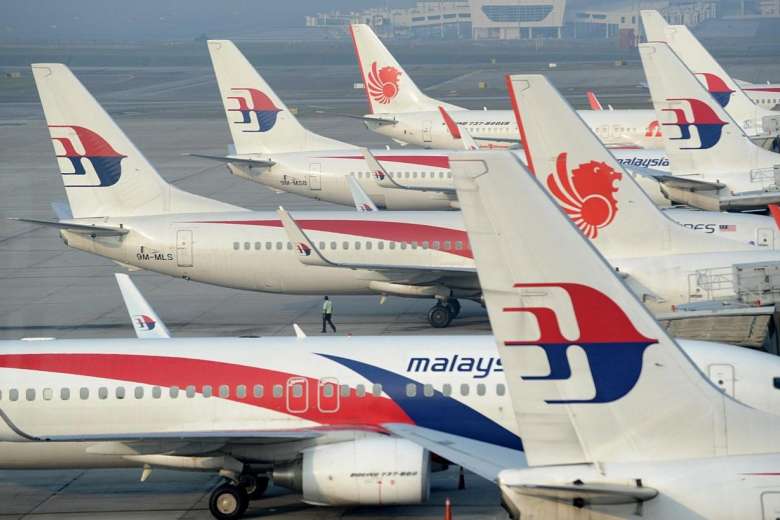
Image from Straits Times.

This post originally appeared on my Facebook page.
Leave a reply