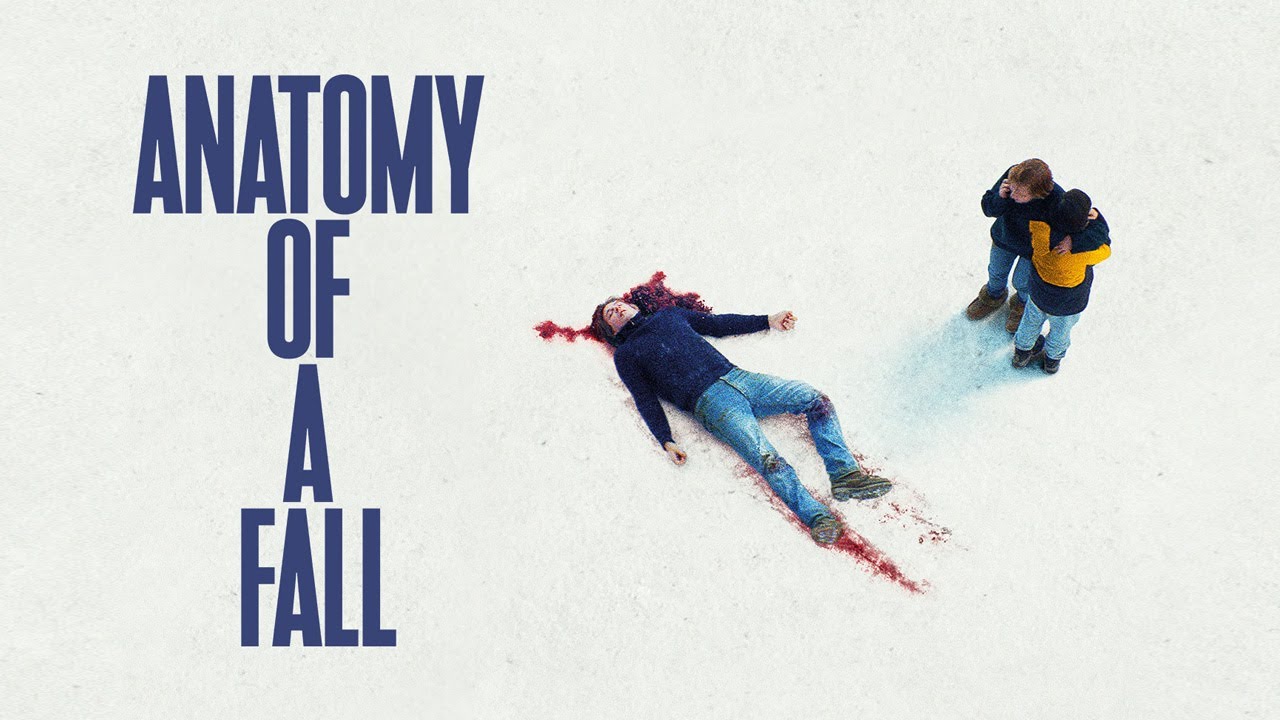
The storyline is simple enough: It revolves around a couple who share a home and a son, and over time, grow apart, sharing little else. The husband is found dead in the snow outside their home and the wife, a writer, is soon a suspect. Was it an accident, a murder or a suicide? The verdict of her guilt or innocence hinges on the testimony of their son, visually impaired in an earlier accident (for which the father carries some guilt). The setting is France.
As a mystery rather than a thriller, it has a steady pace and taut dialogue, rather than action that shocks you or thrills you with fast-paced twists and turns. What unfolds is the story of the couple and their relationship—a study of the road to dysfunction, distance, and sterility.
The film is a worthwhile watch with a superb award-worthy performance by Sandra Hüller. She towers over everyone else, conveying an array of emotions with her dialogue delivery, silences, sighs and gestures. The dialogues in the crunch encounters with her on-screen husband, Samuel Theis, reminded me of Albee’s Who’s Afraid of Virginia Wolf? Overall, the storytelling is effective.
The investigation itself doesn’t take much screen time. The courtroom sequences, a major segment of the film, appear theatrical, with nothing of the flourish that one has become accustomed to in slick courtroom dramas. The back and forth in court offers enough to keep you guessing till the end. Amongst other things, it reminded me of a line from a book I read in my teens: When did things become what they appear to be?
Some of the stand-out scenes for me featured Hüller—her raging encounter with her husband, the ride in the car where she allows herself to weep, the time with her lawyer after the case where sadness, joy, relief, fatigue, vulnerability and much more all come together in a brief moment, the time when she is told she cannot be with her son before his crucial testimony … Oh, there are many, and I don’t feel like setting out a long list.
The son, played by Milo Machado-Graner, does a superb job conveying the trauma of loss he is going through, the bewilderment and confusion of not knowing what really happened, being a key witness and torn between wanting to believe his mother is innocent on the one hand and the evidence piling up to suggest she is a plausible murderer on the other. How do we deal with not quite knowing how you lost a dear one or who was responsible? When the evidence adduced makes a choice difficult and every choice has consequences, what does one do?
The film left me wondering about the act of writing. Factual or fictional, can it stay clear of the writer’s distinctive essence, scent? The film also left me reflecting on marriage, gender roles, masculinity and the quality of space that gets created in the process of living together.
Here are some questions: How do men relate with partners who have a vision, work, victories and their own ways, coming across as assertive and self-assured rather than needy, beholden, dependent, self-sacrificing and worshipful of the man? We see some turn jealous, fragile, resentful, threatened, and quite clueless. They end up prone to taking suggestions as criticism, encouragement as patronising, and an invitation to dialogue and negotiation as a challenge to their masculinity. Celebrating the other is a far cry.
The film also casts a light on the tendency in men who choose to be around the home and spend time with their kids, and expect to be applauded for it, as if it were exceptional, a sacrifice that must in some ways weigh more in the balance of responsibilities shared by the man and woman of the house. Managing a household in a gender-sensitive world is not about the arithmetic tally and division of household chores, but of choices, accommodation, stepping up and stepping in.
The man unprepared for his partner’s success loses his game and his marbles even before he gets started. He postpones, defers, drowns and resurrects his dreams but is afraid to act, lest he fails, lest he falls in the scales of comparison. His paralysis is an act of self-sabotage. He lives with the fantasy of his gifts and prowess and convinces himself that his lack of progress or success is because of his circumstances rather than his choices. He remains unfulfilled and feels unworthy, and unloved. Feeling small in comparison and suffering the pangs of guilt around his son’s accident, his libido deserts him and he feels further diminished when he finds that his wife had a fling as a matter of addressing her sexual ‘hygiene’.
Fuelled by self-loathing, and unwilling to examine how he is the author of his reality, he slides into victimhood, feeling neglected and impotent, silently raging. There is then the inevitable showdown, first smouldering and then explosive, the recriminations, the urge to ‘stick it in’ and cause hurt, the descent into a reappraisal of the entire shared history through the lens of victimhood, and reprisals—the mutually assured destruction of shared space, shared hope and a future. This is a fall to the death for any remnants of meaningful connection.
More than the anatomy of a fall and the death of a man, the film is about a relationship fallen by the wayside, long dead before it is pronounced dead.
Leave a reply