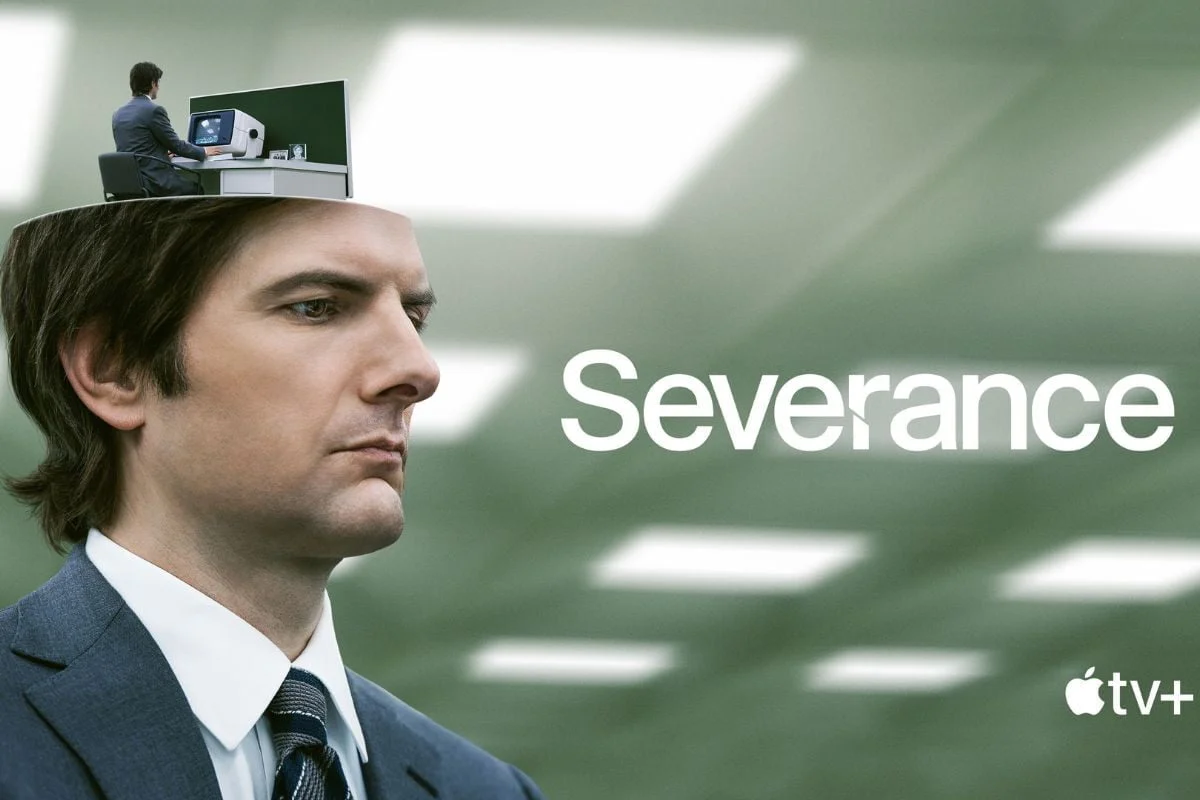
I watched the highly acclaimed first season of Severance (2022) last week and it is already a fading memory. Not because of any brain implants to induce forgetting. Maybe it is just so much of ongoing reading, viewing and listening that is getting overwritten on a ‘first come, first go’ basis. I don’t crave to recall every detail, but I do remember that it was an interesting opening season.
Watching the series, I was reminded of the exhortation made during the early days of my career: ‘One must keep the personal and professional separate’. A popular idea propagated was that a workspace ought to be system-driven, in which the employee was an a-personal ‘resource’, whose fruits of labour mattered, not their feelings—or more accurately, certainly parts of the self were to be left at the gates.
I was also reminded about how often, in the face of trauma, we wish to forget or erase from recall, at will, all the people and events that cause us pain and grief. Haven’t we heard advice that we should immerse ourselves in work to forget or find a release from pain and suffering? What if we could unplug ourselves from the trauma experience altogether?
What might happen if this separation could be technologically engineered and encoded, and you remember nothing of the world you live in (outside work hours) while at work, and vice versa? Or you severe from your memory a slice of your life? The series explores this.
It raises many issues/questions: Upon ‘severance’, are you diminished as a human being? Would you think of yourself as partially disaggregated? How do you construe the world? With a manipulated memory function, how do you deal with fragments of a life that have lost the thread of continuity? With a loss of (or surrender) of ‘integrity’ as a person, how do you grow, evolve? What would it even mean? If we could excise the parts that caused pain, will we be on a path to our own dismemberment? If colleagues become unrecognisable strangers when off duty, what thrives and what dies? What may come of familial ties and friendships? Does intimacy thrive? Or survive? Seeking to access and reintegrate with a lost/forsaken part of the self—is it an inevitable human quest? How desirable and how feasible?
I binge watched the nine episodes—alone. With company, I may have better appreciated the details, the nuances, the future world imagined and the misses in the plot. The aseptic futuristic office with eyes and ears everywhere, imposing in scale and always intimidating, workers behind the desk settings rendered small and amenable to manipulation are all, after a fashion, and familiar fare. The story is propelled by frequent emotion-charged pacing through the long, winding and interminable office corridors, and convey a sense of being trapped and going nowhere. The air is palpably thin and crisp for the most part with all the snow in town, enhancing the warmth and glow of the families indoors, and the desolate solitariness of our protagonist.
What intrigued me was how slowly the scenes evolved but how quickly the 50-minute episodes ended. Though not my preferred genre, it came strongly recommended by my daughter. It held my interest. Nothing memorable about the dialogues. It was visually appealing. It left me with questions to ponder and about a world that we may encounter in our lifetime.
Available on Apple TV+.
Leave a reply