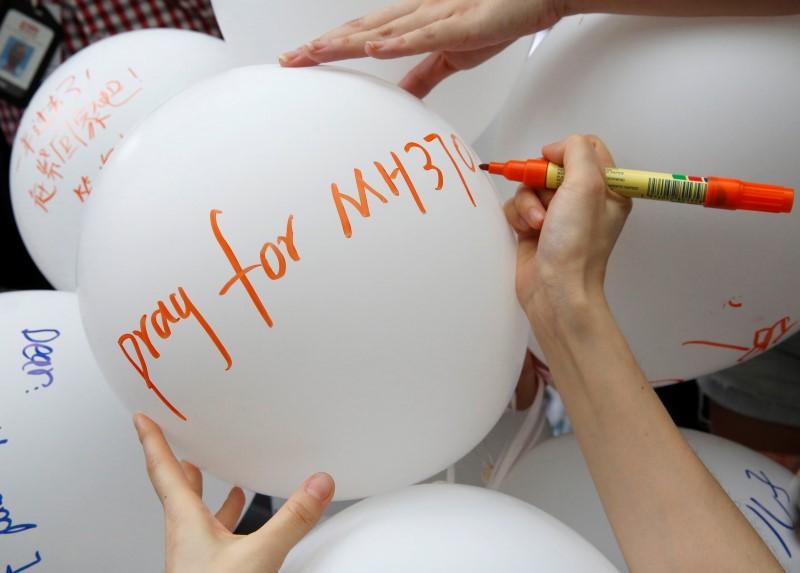
Malaysia formally suspended the search for MH370 in February this year.
‘Credible evidence’ entered the aviation lexicon as the phrase of the new millenium. That it emerged about the same time as ‘fake news’ did in the public sphere is curious and unrelated, but in a strange way, serves up pretty much the same function of denial – of what is worthy of attention, and actionable.
It was in March this year that we first heard from authorities in Malaysia about a private company’s (Ocean Infinity, or OI) offer to search for MH370 on a ‘no find, no fee’ basis.
After this became public knowledge, it was revealed in August that there were two other companies that showed interest in searching for MH370. All for the good, we thought. But there wasn’t a decision in sight.
Australia appeared to make quite clear that while it was willing to assist any party stepping forward to search, it was not up to shouldering search responsibility like before. Or funding it for that matter. Its scientific establishment, the CSIRO meanwhile made bold to say that it had figured out MH370’s whereabouts with a level of certainty that most investigators in the business would shy away from. Australia’s Darren Chester pronounced that there was no ‘credible new evidence’ for him to endorse the search area that CSIRO proposed.
As for China, we know where it is located on a map, but on issue, we are left to our best guess.
Under the persistent gaze of the families, the media and the public, Malaysia pleaded that it was in discussions, that the matter was complex (love to hear more). Barring the few involved in statecraft, the offer of a ‘no-find, no fee’ was simple and straightforward. We of course don’t know what the sticking points were.
Some guesses guided by what I read on the internet:
- What constitutes ‘finding’ the plane? What parts. components will constitute ‘value’?
- Will locating be sufficient for the fee? What about salvaging? Would that be a separate deal?
- What about verification and validating that the debris if found is indeed from MH370?
- What resources and assistance will be offered (bathymetry data, Fremantle port docking, ATSB / CSIRO support…)? How will this be valued and compensated?
- What about human remains, if located? (This could be of interest to the families)
- There is a subsisting agreement with China and Australia dating back to 2014 (if I remember correctly) on salvage, recovery, etc. We don’t have the details. I don’t know if that remains valid today since Australia will not lead the search, and China doesn’t care.
- Should this be an open ended mandate, or a time-bound deal?
I am sure there must be many more issues to table, and thrash out, some technical, some commercial, some precautionary, some dilatory, and some simply dubious.
What we have heard are mixed messages and statements that sometimes raises the bogey of a questionable commitment to search. First, that discussions are on. And on. And on. You have to wonder if the demands from the parties are so unreasonable or the stances so divergent that agreement is a consequence of attrition. Second, is the requirement of ‘credible new evidence’. This like a verbal tic slips in every once in a while, but otherwise is well understood as shorthand for STALL. Third, is the manufactured requirement of the consent / agreement of all parties of the Tripartite (Malaysia, China and Australia). The Tripartite was a working mechanism created to inform the search, since their assets and monies were invested in it. At this juncture, there seems no basis to locate responsibility for a decision on contracting with a private firm in the Tripartite group. When Malaysia says it needs to study the ATSB final report on the search for MH370 (who would believe that they haven’t had access to the draft well in advance?) or that it needs to take a view on the OI contract in the Tripartite group (when it is its prerogative), it rakes up fresh doubts about sincerity and a sense of urgency in the principal nation.
The point is that the summer months in the southern Indian Ocean area are here: The best months weather-wise for the search in the waters there. October has passed. November will soon be gone. While Malaysia dithers or drives a hard bargain (we don’t know which), people are watching, the clock is ticking, and the desire for a resumed search becomes more frantic.
Perhaps Malaysia reckons that what is to be located is degraded, but not perishable. So really, there is no need to hurry here.
What perished on March 8th 2014 lives on in memory, anyway. No search is called for. No timelines needed. No salvage.
What is alive are questions.
Image from Reuters.
This article originally appeared on my Facebook page.
Leave a reply